BLOG

Twin Peaks, Fog, and Invisibility

In the last week, we’ve had some dense fog, and Twin Peaks is a great place to watch it scudding in on the wind. I was up there the other day, slowly circling the peaks, when a woman in a car pulled up beside me and rolled down her window.

“Does this road only go to the lookout point?” she asked. I explained that it continued down to residential areas on the other side. I don’t blame her for asking. The fog had settled in, transforming the place into an isolated gray mountain, with little indication we were in a city. We could have driven into … the Twilight Zone.

This nearly-invisible person is walking safely on the other side of the wall


One indication we hadn’t:   joggers, dog-walkers, and bike riders. There weren’t many up there, with all that fog, but there are always a few – diehards or fog-lovers.

To them, I have a request: Please wear bright light colors, preferably with reflectors, especially toward evening. Twilight sucks all the colors out, and the fog even more so.  The dark red hoodie isn’t bright in fading light, it’s nearly black. The person in navy blue was nearly invisible, so also the bike-rider in gray. If I can’t see you easily… All it takes is one careless or distracted or confused driver to ruin your whole entire day. Please stay safe.

Reopened: Medical Center Way

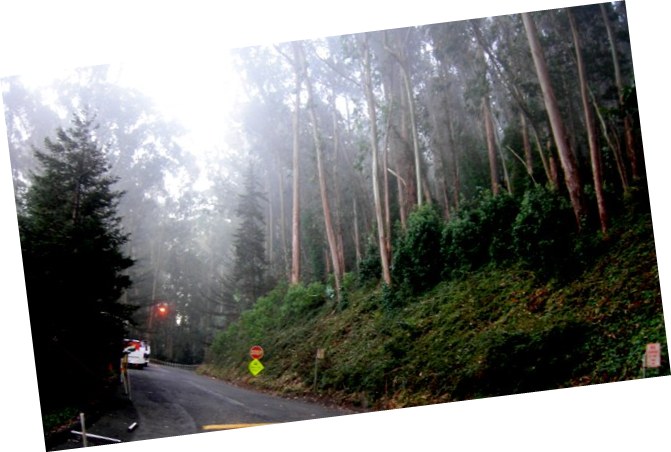
Medical Center Way is open again. This is the lovely mountain road that goes through Sutro Forest, connecting the UCSF Aldea student housing to Parnassus (and is the shortest route from Forest Knolls to Stanyan). I’ve heard it called the prettiest road in San Francisco, and people have told me they take that route just for its beauty. Certainly I’ve trundled down the half-mile stretch between Johnstone and the dog-leg above Parnassus  at 15-20 mph, taking in the splendour of the trees and the scent of eucalyptus. It’s looking shorn now; a lot of the understory growth has been cut back, and some of the trees are gone. But even if not the lush wild place it was before, it’s still lovely.

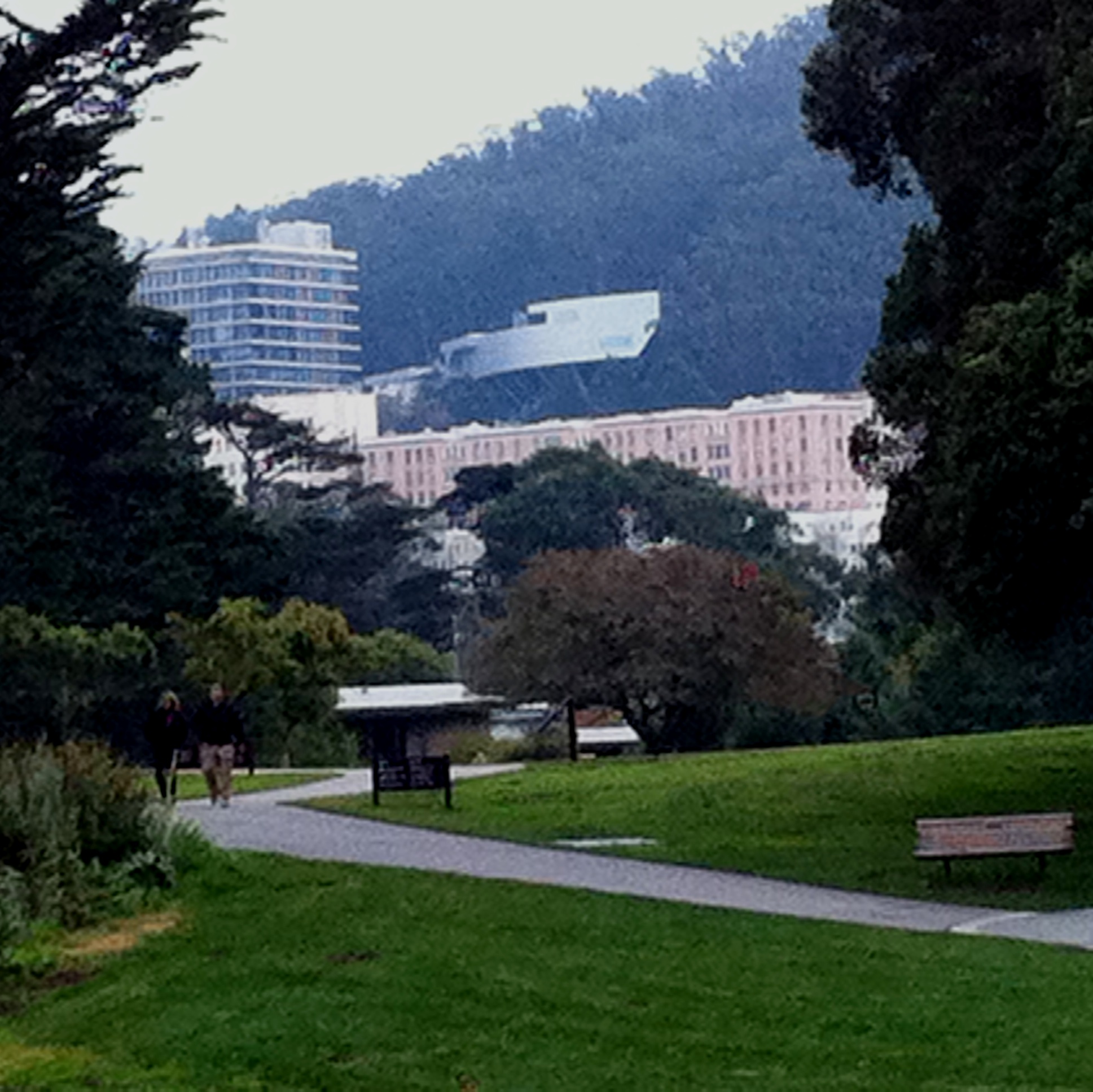
A spaceship in the forest?

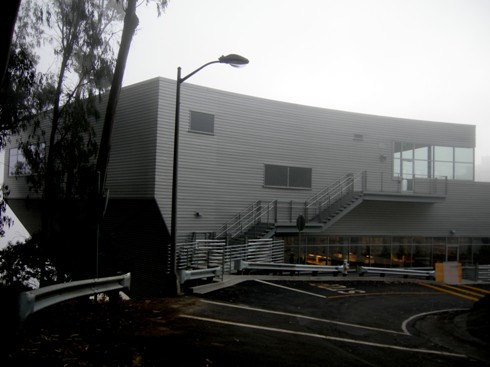
It had been closed for nearly a year, for the construction of UCSF’s stem cell research building (or rather, The Center for Integrative Medicine). That building looked amazing in the drawings, and fantastic from Golden Gate Park: like a spaceship that had landed in the forest. And someone else, gazing at the building said, “It looks like it’s been CGI’d into the forest.” (If anyone has a better picture, please send it! This really doesn’t do it justice. ETA: Thanks… this is a lot better.)

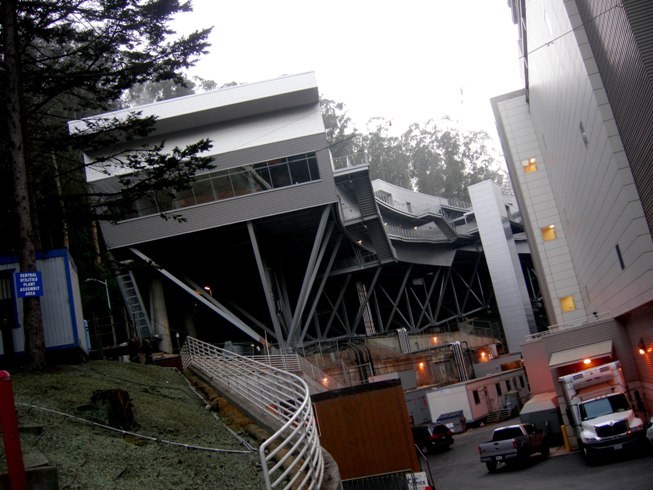
Close up, not so much. Snaking along the lower reaches of Medical Center Way, behind the hospital on Parnassus, it’s sheathed in what looks like aluminum siding. “Like a trailer abandoned by the roadside,” sniffed my companion. It does have a rather boxy, automotive appearance, like an RV or a railroad car. This is a pity, because the actual structure has a lot of interest.


That’s visible from the loading dock side, which isn’t technically a public access area. The box curves along the road, and it’s balanced on a network of struts that isolate it from its base in case of an earthquake. With the tall trees behind and beside it, it looks somewhat surreal.

[ETA 2: Here’s another article on the building, with a lot of architectural details. I notice they’ve used our spaceship metaphor. The sincerest form of flattery! And this article is from UCSF itself.]

Cat volunteers?

A cat-lovers group is looking for volunteers. They care for a feral cat colony nearby.

This would involve coming once a week,  once a day, and takes 30-40 minutes of putting food and water in the feeding areas and loving some great cats.

If you’re interested, please email me at fk94131 at yahoo dot com, and I will put you in touch with the volunteers who  manage this feral cat group.


Cat Found in Sutro Forest

We’ve been sent a report on a new cat that has shown up in the forest in the Belgrave/ Stanyan area. It’s probably someone’s pet. We don’t have photos, hence the public domain drawing on the right; but here is the description:

“It’s clearly some sort of purebred Siamese, maybe a lynx point? Big tawny body, very Siamese face and large ears. I was wondering if you’ve heard about any lost cats? This cat must have belonged to somebody. If you hear of anything, please let me know. I’ve just spotted it once, but the construction workers have spotted it a few times. The cat seemed quite fearful, sort of slinking along atop a fence, then down into the woods.”

(There’s construction work going on at Belgrave; a home-owner on the forest edge is doing a major re-model.)

If it’s your cat, contact us at fk94131 at yahoo.com and we’ll try to put you in touch with the people who’ve seen it.

Viewing the Blue Angels

One of the neat things about our neighborhood is that it’s so close to Tank Hill and to Twin Peaks, both excellent viewing platforms for anything happening on the Bay – flying exhibitions, firework displays, or fog flow.

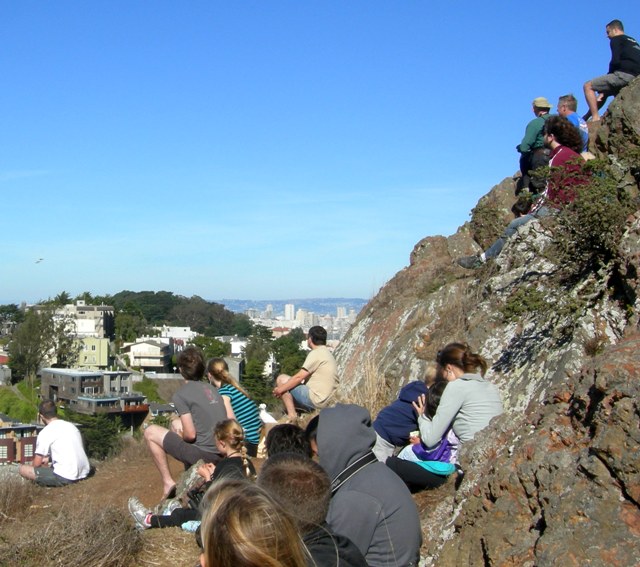
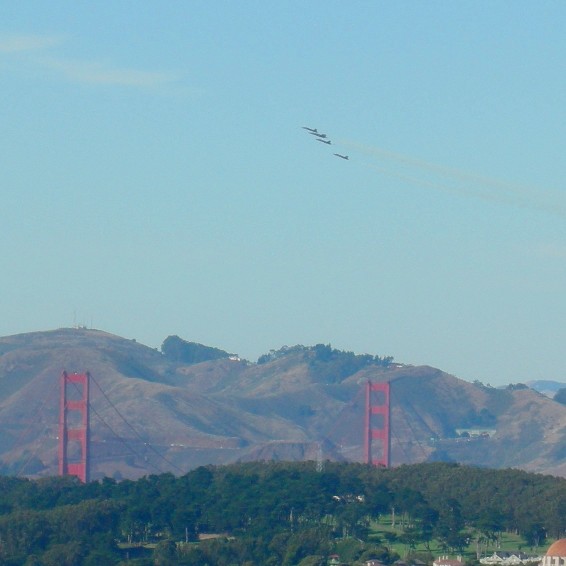
On Saturday, armed with binoculars and pocket-camera, I went up to Tank Hill for the Blue Angels. The place was quite crowded, though some people, misled by the warm day, were driven off by the strong wind before the show ended. I’d worn a windcheater, so I was fine; it was the t-shirt crowd that were cold.

It was great. Not only could we see all the way over to the Golden Gate Bridge and the Bay, we could see the planes come by our own Sutro Forest.

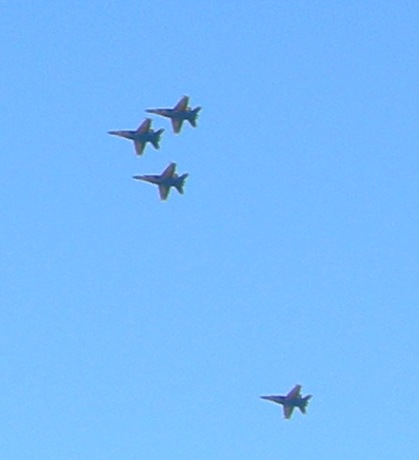
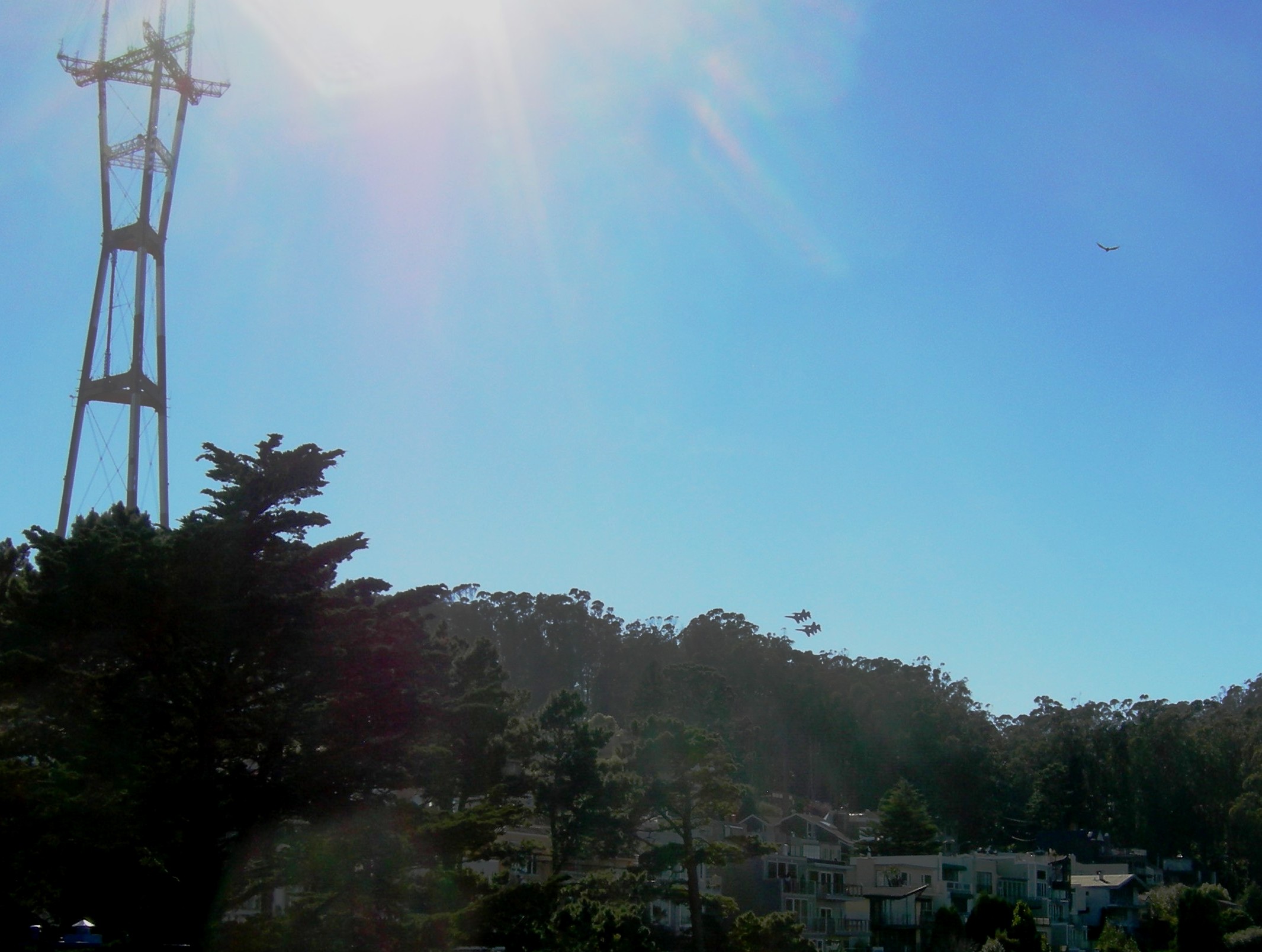
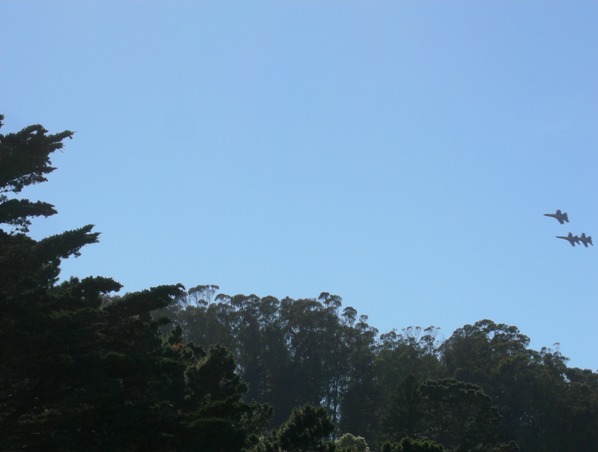
On Sunday afternoon, I actually went into the forest, even though very little of the airshow is visible from there. But a couple of times, the planes come blasting past the forest, behind the eucalyptus. There’s something surreal about it – the contrast between the very sylvan forest and the power and thunder of the most artificial thing – a jet aircraft. I got a couple of poor-resolution photographs, but a spectacular experience.

Missing Pekinese Dog (Found)

Update: I received word today that the dog has been found.

Update 2: So yesterday, I actually met Koko and Iina for the first time. The little dog was entirely as affectionate as advertised… she came over and jumped up to make friends. I’m so glad she’s home.

————————————————————————

One of our neighbors has lost her dog. Here’s the posting from Craig’s List:

My Dog’s name is Iina. She went missing on 10/4/10 Monday 1PM in Inner Sunset Area.
She is five years old, female. Small dog(about 11 pounds) with blond hair. Very Very Very affectionate. Loves people. She is wearing a collar with name and phone number of her veterinarian in Novato CA. Although I strongly believe in good in all people, there is a reward! No question asked.. please please call or email me 415-713-6650 or coko13@gmail.com Thank you!

The photographs (also from Craig’s List) show this little blond Pekinese dog. Please keep an eye out for her.

Update: A reward of $500 is being offered.

Wildlife Rescue

Living near the forest as we do, we have a fair amount of wildlife around us: birds, raccoons, skunks, opossums, coyotes and who knows what else. So what happens if you’re suddenly responsible for a small, injured creature?

Today I found out, when I volunteered as an ambulance for a Green Heron. You take it to WildCare in San Rafael (at  76 Albert Park Lane, San Rafael, CA 94901).

Actually, first  you find out if it actually needs help:

  • Call Wildcare at 415-456-7283 (9 a.m. to 5 p.m.)
  • If it’s after 5pm PST (Pacific Standard Time), call their 24-hour Nightline at 415-300-6359.
  • Read their very informative page.

Then you decide if you should take it in. It’s a long drive, but you might save a critter’s life. 

They’re open 9 a.m. to 5 p.m. every day of the year, and they have a wildlife hospital. They try to rehabilitate the animal or bird, and release it back to the area it was picked up. (California law does not permit relocation of wildlife.)

It’s a pleasant place, just across a little creek, which has tree-lined banks and a resident duck population. The courtyard is lined with cages, enclosing birds that cannot be released, usually because they have a disability that prevents them from fending for themselves. It also has a pond with a couple of resident pelicans (one brown, one white), a sea-gull, and an egret that may just have been visiting.

The Green Heron had flown into someone’s living room, and been brought to the Randall Museum. Though they do have an animal room, they don’t do wildlife rehabilitation, so the bird needed to go to Wildcare. [ETA: Wildcare sent an emailed update: “The Green Heron was suffering from wounds and I see a note of a fracture. I see from the log book that it was transported to International Bird Rescue up in Fairfield on the 7th. IBRRC have the facilities best suited to shore
birds and one of our fantastic volunteers gave the Heron a ride up there.”]

I took a photo of it, then dropped it off, and spent a few minutes looking round at the denizens of the courtyard. (Visitors are welcome.)  The birds were beautiful – a Swainson’s hawk, a spotted owl, and a turkey vulture among others.

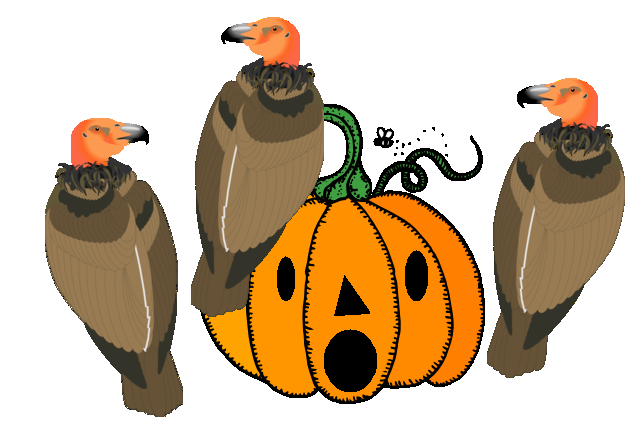
Each was accompanied by naturalist’s notes. They were all informative, but my favorite may have been the one by the turkey vulture. “Don’t be surprised to see a melon in here with our Turkey Vulture,” it said. “Although they eat carrion, they do like a change once in a while. In fact, there have been cases where large numbers of Turkey Vultures have descended on a pumpkin patch.”

The image was irresistible, especially in this season.

UCSF’s Temp Cellphone Antennae

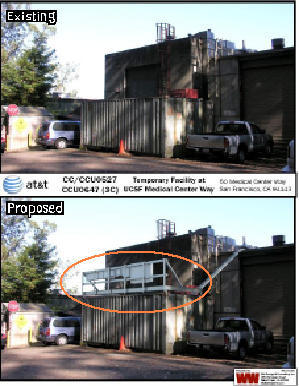
In order to improve AT&T cellphone coverage in the shadow of Mt Sutro, UCSF is adding two temporary cellphone antennae: One at 400 Parnassus Avenue (which is down on their campus) and the other about halfway up Medical Center Way, quite near Edgewood Avenue. They’ll be on the roofs of existing buildings, and no trees will be felled on Medical Center Way to accomodate the antennae. It’s not overly visible (see the picture for a simulation, taken from UCSF’s Q&A pages). The temporary antennae will help AT&T coverage immediately.

A permanent installation is planned in about a year; that may be larger, and cover three providers. UCSF is looking at AT&T, T-Mobile, and Verizon.

Damon Lew, from UCSF’s Community Relations Office, sent out this message:

“To improve cellular phone service for doctors, nurses, patients, visitors, and staff of the UCSF Parnassus Campus, temporary cellular antennas will be installed on the Ambulatory Care Center at 400 Parnassus Ave. and on the Environmental Health & Safety facility at 50 Medical Center Way. Permanent equipment will eventually be installed to maintain good cellular telephone coverage and we will keep the community informed as the project proceeds. Installation of the temporary cellular antennas is scheduled to begin October 11…”

More information about this project can be found here:  http://community.ucsf.edu/pdf/Parnassus_Campus_Temporary_Microcellular_Sites_Questions_and_Answers.pdf .

If you have further questions about this project, please contact me at dlew@cgr.ucsf.edu or (415) 514-2651.

Muni, Clipper and Me

On Saturday  (2 Oct 2010) I took the Muni downtown from Forest Hill Station. I do this often enough that I know the drill, but seldom enough that I don’t carry a pass – or have the correct change. I always need to use the change machines.

But on Saturday they were out of service. Every single one was blocked with yellow tape. I looked at the station-master in puzzlement. She waved me over to new ticket machines on the other side of the station. Those didn’t need the exact change, they worked with credit cards. And they issued paper tickets at $2 for a single trip, $4 for a return fare.

Whatever happened to the transfer with the 90-minute validity? I wasn’t sure.  (It was academic, anyway. I was meeting friends for lunch; it would take more than 90 minutes.) After a little fumbling, I got a return ticket. It had a nice picture of the ballpark on the front.

On the back were a couple of icons indicating how to pay (just tap your card on the reader); and some fine print.

I couldn’t figure out what was meant by “A 90-minute transfer will be calculated automatically from initial time of entry.” I went looking on the SFMTA website, but that was some miles away from being crystal clear…

By contrast, here’s what the old-now-obsolete transfer said on the back:

That’s crystal clear.

So anyway, I called 311, and within a minute or two (at 11.30 at night!) got a helpful lady who assured me that I could use the colorful-but-baffling ticket in exactly the same way as the old Muni transfer. It really was valid for 90 minutes from the time of entry, so if I took a short trip downtown, I didn’t have to buy a return ticket.

I’ll be trying it out one of these days, and will update this post then. I might even break down and get a Clipper card. It’s the San Franciscan thing to do. [ETA: It works. It’s valid for 90 minutes, no problem.]

(Other than that confusion, things were going reasonably well. Transit staff were on duty everywhere telling people what they needed to do.)

“Summer” is Burglar Season

San Francisco is special; our summer begins in the Fall…

And there was a helpful reminder in the Park Station Police newsletter about securing our homes. I’m reproducing it here.

“Prevent Home Burglaries!

With our Indian summer upon us, the days and nights are warming up. People have the tendency to leave their windows open while at work during the day and overnight to keep their homes cool. Something to keep in mind is that burglars are aware of these trends, so it’s important to keep windows and doors locked at all times. Especially those located at the rear end of your homes; backyard-hopping is a common access point into homes and/or garages. It’s nice to be able to open your windows on a beautiful sunny day and sometimes we just forget to close them up. Take this opportunity to gather with your neighbors and form a Neighborhood Watch group. Working together and knowing your neighbors can help to prevent burglaries in your area. Get organized and become more aware of suspicious individuals and activities taking place. Call SF SAFE at (415) 673-SAFE to start your Neighborhood Watch group or for a Residential Security Assessment.  You can also email info@sfsafe.org.  Visit http://www.sfsafe.org for more information and safety tips.”

The Stairways of Forest Knolls

One of the most delightful aspects of our neighborhood – besides the wonderful forest – are its romantic stairways, climbing the steep slopes of Mount Sutro and linking the roads.

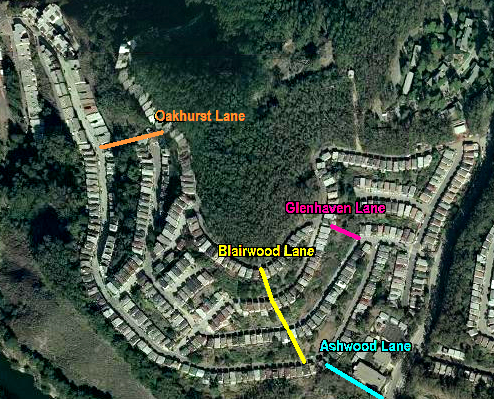
What surprised me was that they all have names. They’re lanes:  Ashwood Lane; Blairwood Lane; Glenhaven Lane; and Oakhurst Lane.

Not only are these stairs a convenient short-cut linking our curving roads, they offer great views and good exercise (of which more later). Some of them – like Glenhaven Lane – are well-lit at night, others less so. They’re all steel and concrete, the effect mellowed by green-painted railings, and vegetation growing right beside and underneath the floating steps. (They don’t have risers, so rain and light can get through to the plants.)

Glenhaven Lane

The stairways are all in flights of around 100 -200 steps, though some are actually systems of several flights of stairs. The shortest stairways are Ashwood Lane, which connects Clarendon Avenue to Warren Drive, (109 steps), and Glenhaven Lane, connecting Oak Park Drive to Christopher/ Crestmont (167 steps).

The two longer stairways are Oakhurst and Blairwood. Oakhurst runs from Warren Drive to a cul-de-sac on Oak Park (162 steps) and up to Crestmont (another 193 steps) for a total of 355 steps.

Blairwood Lane  runs in three sections from Warren Drive to Oak Park (117 steps) to Christopher (another 103 steps) to Crestmont (118 steps), and totals 338 steps. (Actually, it’s almost contiguous with Ashwood, so you could almost consider them the same stairway, which would make it 447 steps.)

A Staircase View

I’m not the first to write about these stairs. In ‘Stairway Walks in San Francisco‘ by Adah Bakalinsky with Marian Gregoire, our neighborhood gets Chapter 17. (With the slightly off-putting title, Grading & Sliding, Fog & Drip. They must have been here on a foggy day…)

And our own neighbor Beverly Mack wrote “Steppin’ Up” in the Jan 2010 issue of the Forest Knolls Neighborhood Organization newsletter, about the benefits of the stairs as a real-life exercise machine. Here’s the article (published with permission and edited to avoid duplication — all the step-counts above are from that article).

STEPPIN’ UP by Beverly Mack

We are fortunate to have stairways that connect our neighborhood streets as an immediate source for exercise. The advantage of having the stairs is that you do not have to drive to the gym – no gas, no traffic, and no parking problems. The stairs are available 24 hours a day, seven days a week, with no closures because of holidays. And above all else, IT IS FREE.

So, let’s start exercising by stair climbing. Take your dog, children, grab a neighbor, or better yet start a group. Stair climbing uses your quads (front of your thighs) and buttocks. It is an intense exercise because you are carrying your body weight against gravity. It is an intense cardiovascular and leg muscle activity. And it is low impact and safe for your knees. Do not do too much too quickly, and be sure to consult your orthopedist if you have existing knee problems. There is stress to your knees coming down stairs rather than climbing up, so when you reach the top of any level, walk back down along the sidewalks of our Forest Knolls streets.

Depending on your body weight and pace, stair climbing can burn 300 calories in 30 minutes. Make sure to wear shoes with good support. Drink enough water before, during and after your workout. Think about alternating stair climbing with other activities, such as taking a walk in our great forest. Whatever you do, make sure to check with your physician.

Start slowly, wear supportive shoes, drink water, and don’t forget to stretch  before and after exercising. Above all have fun. And besides, it’s a great way to meet your neighbors.

Tree-hunting in San Francisco

I’m not going to call them “Landmark Trees” since that term’s already taken. I was thinking of “spectacular trees,” but Donna in comments asked, What defines a spectacular tree ? That’s an important point. Size? Location? Species? Appearance? There’s no easy way to say.

So what I’m going to call them is Memorable Trees. They’re the trees one notices and remembers. We’re lucky we have many of them around. Here are a few, all from around the West Portal area. They’re all, as far as I know, on private property. I hope their owners find them as remarkable as I do.

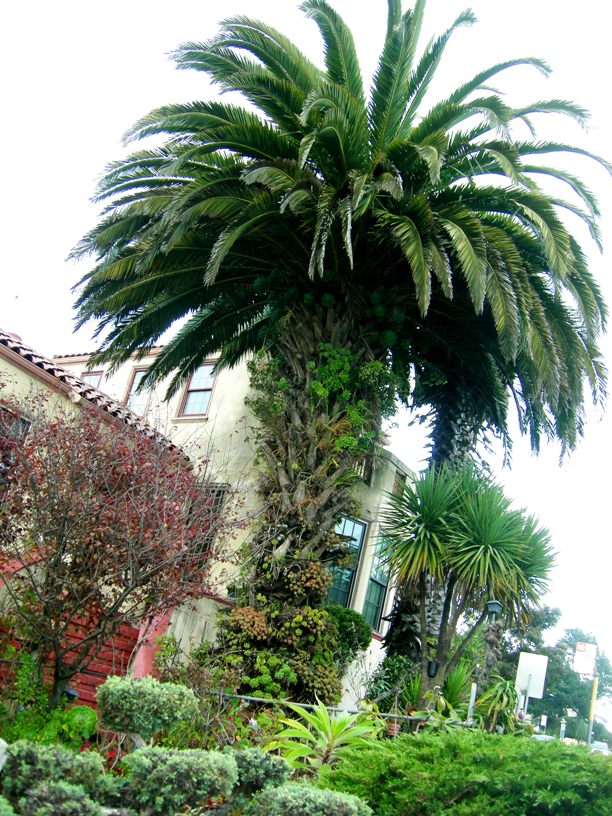
This palm tree is one of several on Portola Drive. They’re so unexpected in this foggy part of the city, but they seem to be thriving. This one in particular is amazing because its trunk is covered in other plants, mainly succulents. It’s not just a tree, it’s a garden in itself.

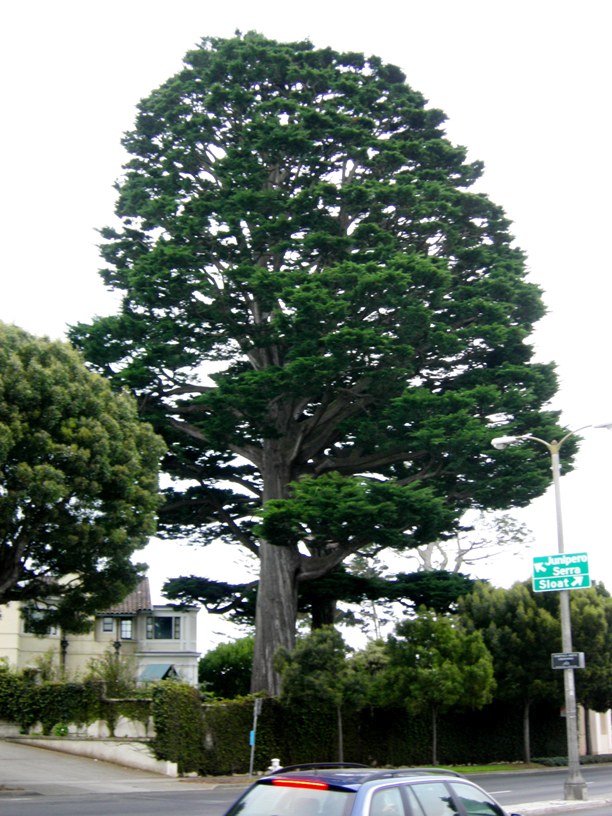
This humongous tree is on Portola, too, just before the Junipero Serra/ Sloat split, at the entrance to St Francis Wood. And what better guardian could the neighborhood have?

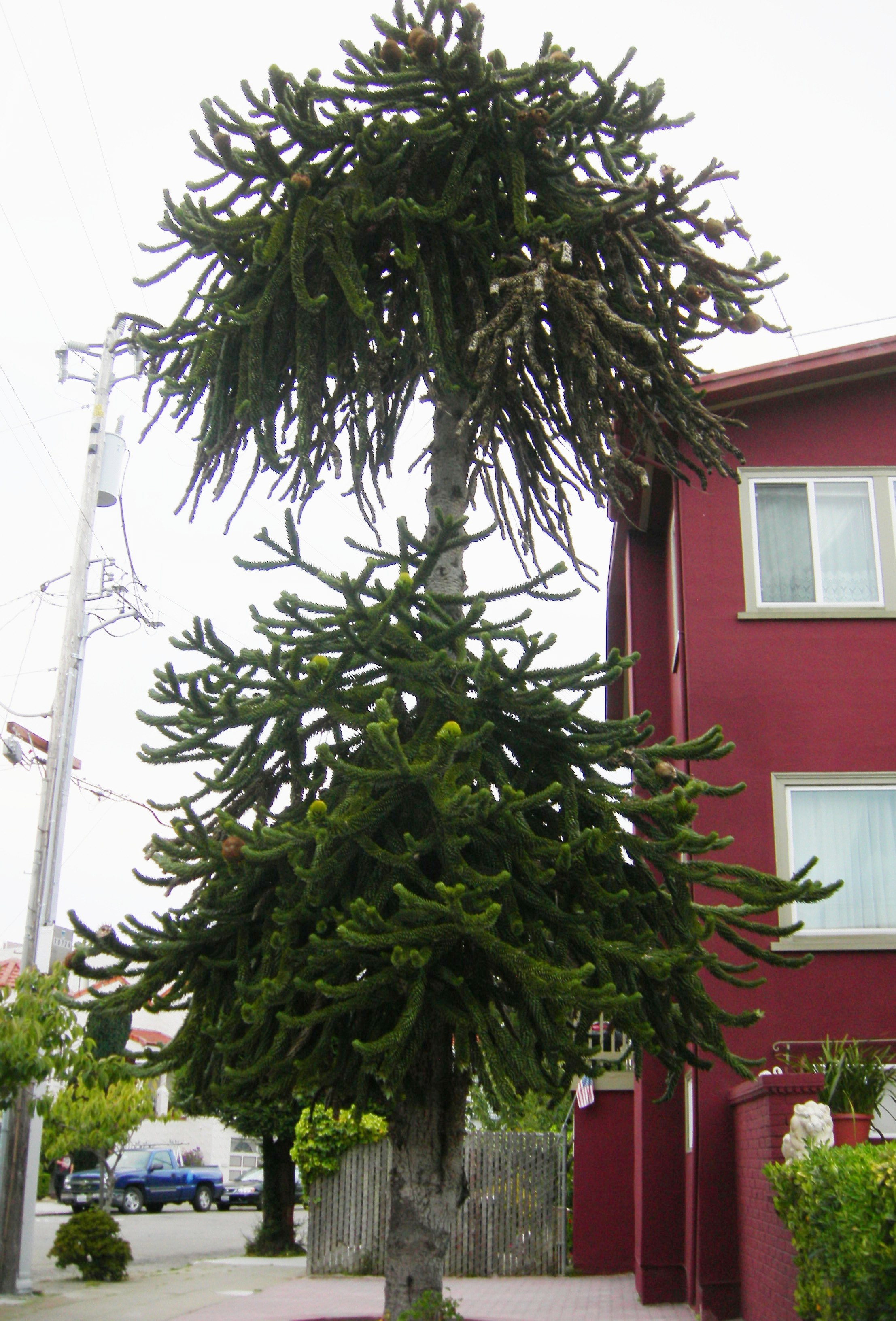
I’ve long been beguiled by this tree’s dramatic and unusual shape. An araucaria of some kind?  It has big spherical fruit. The owners like it (I complimented them on it when they were re-doing their yard). But I can’t see where its water is coming from, surrounded as it is with brick and pavement. Hope it lives long and prospers.

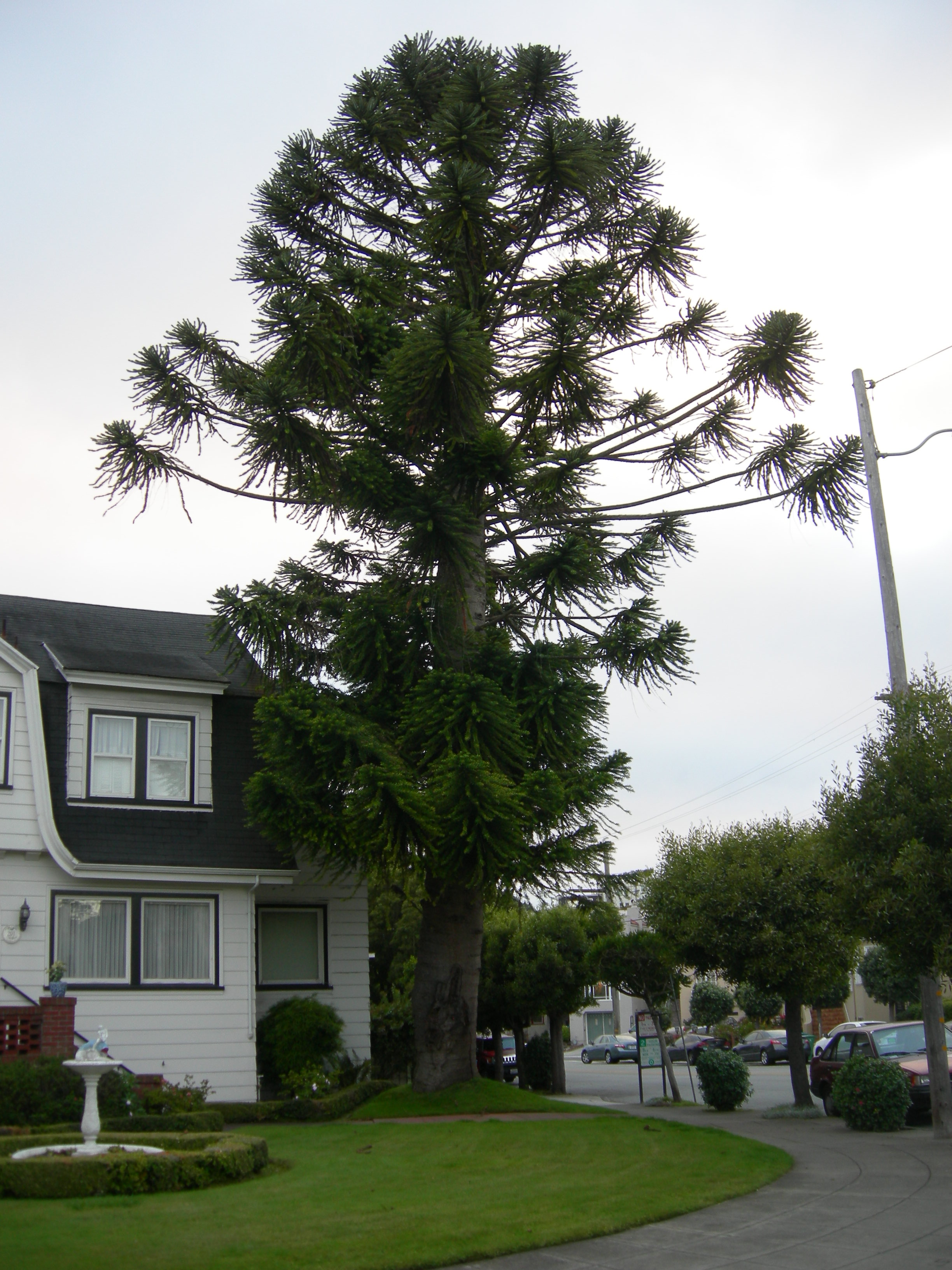
This is another dramatic tree on Wawona. I love the contrast of the very traditional European-looking house with fountain and trimmed lawn, and this unusual tree.

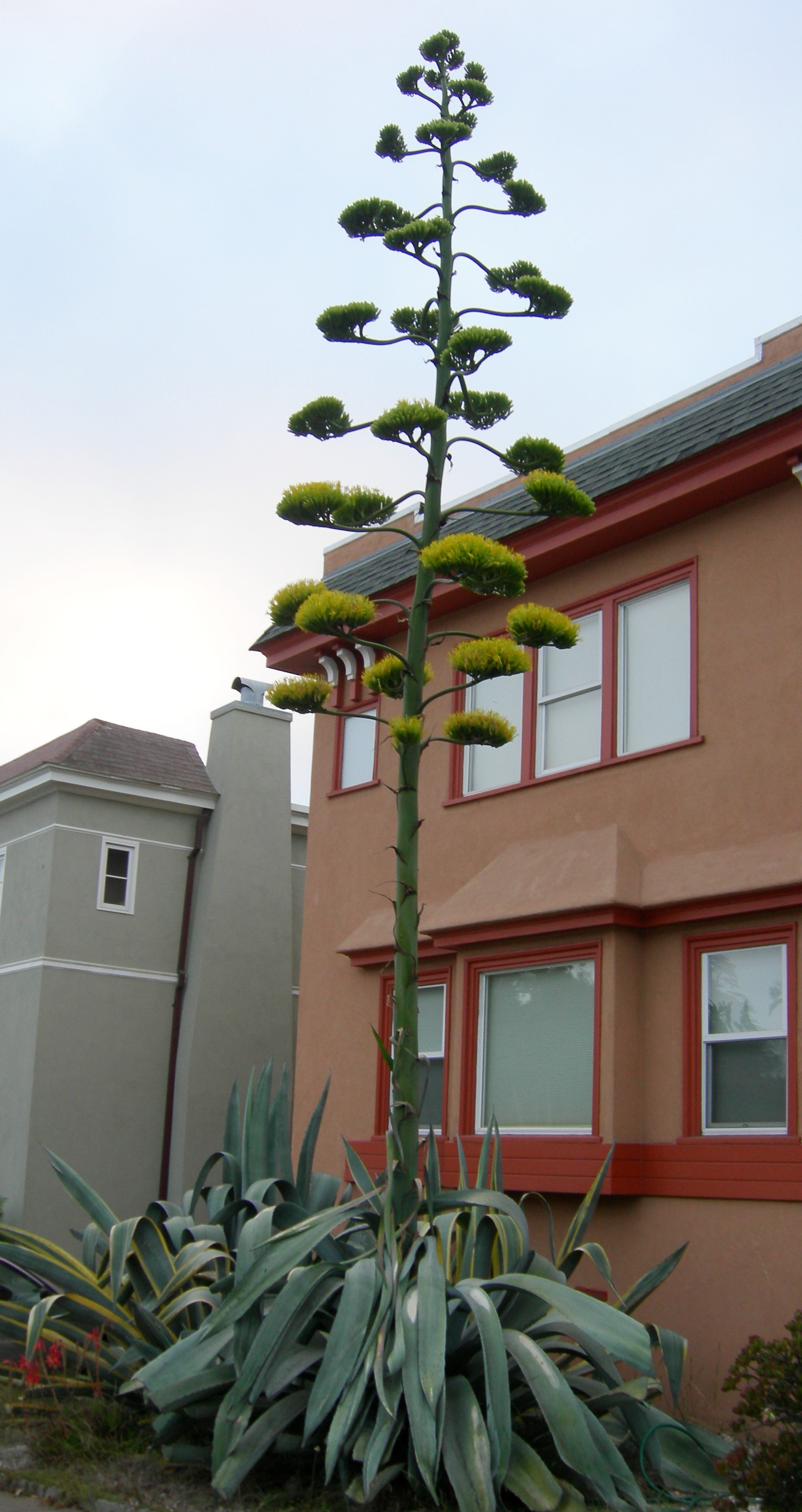
And the final picture for today (also from Portola)  isn’t a tree at all. It’s a flower spike taller than a double-storied house.

Critter-Spotting on a Foggy Night

A foggy night in a city that knows how to keep its secrets… and me, prowling along in my little car, hoping it would share them. Not the kind of secrets found in City Hall or downtown in the dark alleys… critters.

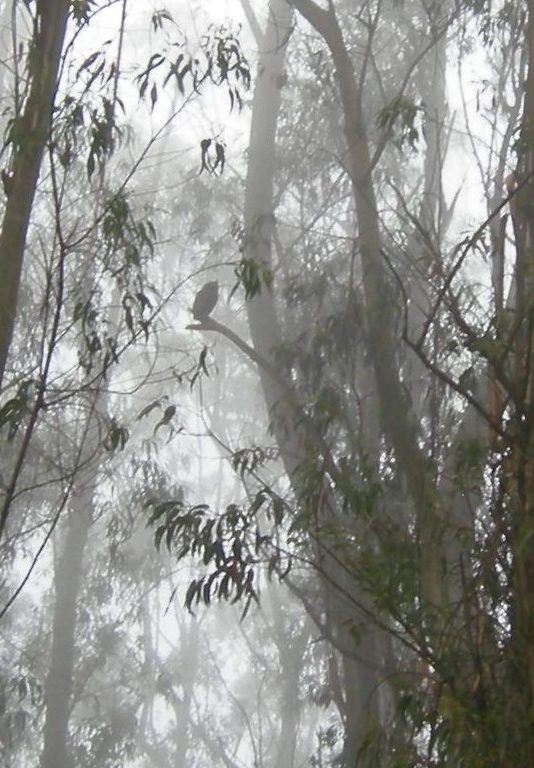
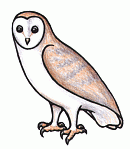
Foggy nights are often good for critter-spotting. On Panorama Drive, I saw a trio of raccoons chase each other across the road and disappear into the shadows between two houses. And then, on Twin Peaks, which was densely swathed in fog, a barn owl!

I’ve been wanting to see one, ever since learning that they do inhabit San Francisco. This one was sitting by the side of the road, like a large white cat wanting to thumb a ride. Cursing myself for forgetting my camera, I stopped the car and put my flashers on to watch it.  I was afraid someone coming fast round the bend might take it out, and wished it would move. It walked down the road a bit, which didn’t help. Two cars went around me.  Then the  owl took flight, just a few feet, but thankfully onto the hillside.

I went home for my camera, but the owl had moved on. At least it wasn’t roadkill.

Forest Knolls Neighborhood Garage Sale, Sept 11, 2010

The big neighborhood garage sale is on!

Forest Knolls neighborhood garage sale…great stuff….great prices…

Saturday, September 11

From 10 am – 4 pm ….

WHERE:

  • 309 Oak Park Drive
  • 317 Oak Park Drive
  • 325 Oak Park Drive
  • 333 Oak Park Drive
  • 377 Oak Park Drive
  • 325 Christopher
  • 89 Woodhaven Court

(San Francisco 94131)

On Sutro Tower

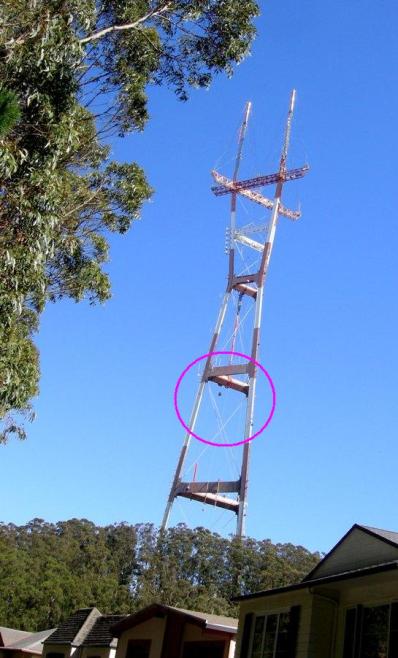
It sometimes happens in Yosemite. You look up at a sheer cliff, rising straight up from the valley, and realize … that small moving black speck? It’s a person up there!  The other day, looking up at Sutro Tower, I had a similar feeling. There was something small and black suspended from it, moving.

Sutro Tower, with worker

As I continued to look, I realized it was indeed a person,  riding in a basket or gondola or whatever it’s called, suspended by ropes high above the city. I’m sure he (or she) was getting slammed by the wind. But what a view!

Worker on Sutro Tower

Christopher Crestmont Cleaned Up

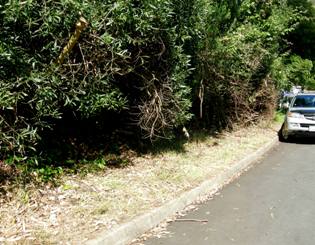
A few days ago, I posted (here and here) about UCSF cleaning up the brush along Christopher and Crestmont. Over the last couple of days, I’ve been walking around and talking to people who live near there. It’s looking good.

They did a pretty neat job of trimming back the bushes that were overhanging the pavement, so it’s easier for cars to park without blocking the roadway. Some of the overhanging branches have been trimmed back too, and it’s all been nicely and professionally done so it actually looks good rather than raw and nasty. They’ve been careful to preserve plants that people had put in or nurtured along the road edge.

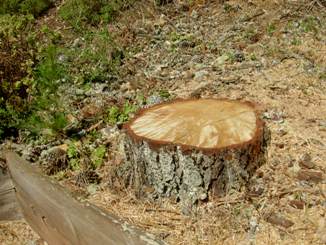
They actually felled and removed two hazardous trees along Crestmont. Any others presumably must await the full hazardous tree report.

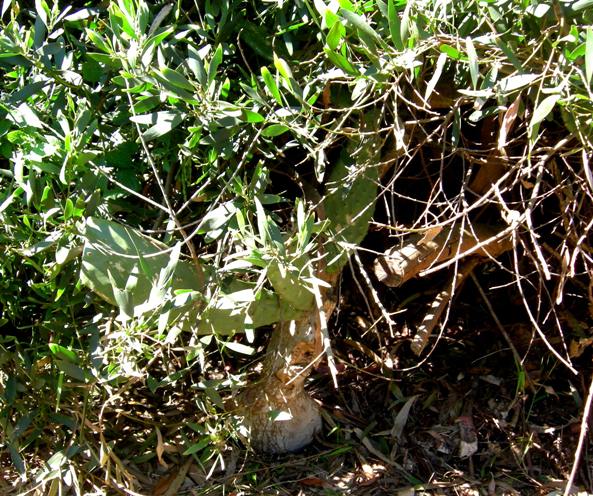
And as a bonus, this old prickly-pear cactus appeared, apparently thriving under all the acacia! (You may need to click on the picture to embiggen it to actually see the cactus.)

Thanks, UCSF; and thanks, Forest Knolls Neighborhood Organization, which has been working to make this happen.

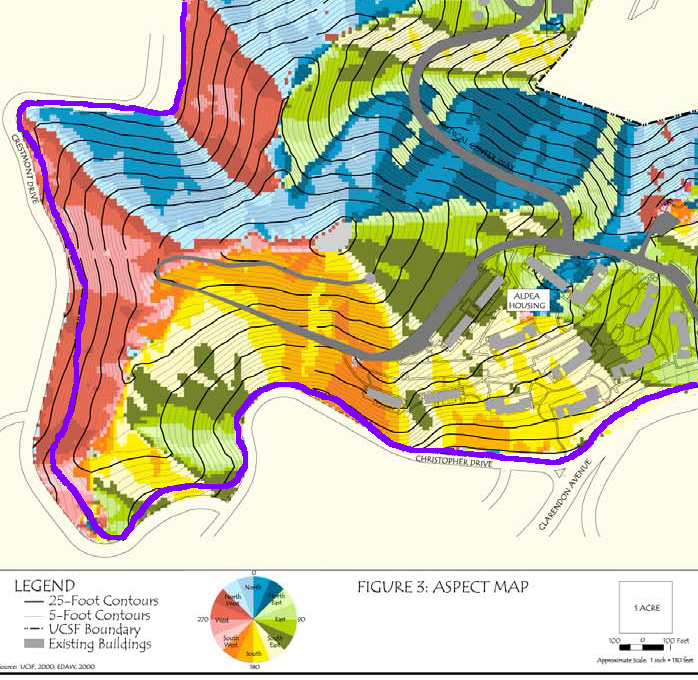
Separately, I’m not sure where the dispute with the city stands on who has responsibility for hazardous trees. The map below shows the issue: The purple line (I think) shows the UCSF boundary. (This map – made in Year 2000 -is based on an excerpt from the EDAW report done for UCSF. The colors just show in which direction bits of the mountain face…blue is north, red is west, yellow is south, and green is east.)

According to this map, the UCSF Open Space Reserve boundary is not exactly aligned to the roads. There’s a space between the road and the reserve. And that’s where some of the trees are that people are worried about. Of course, if the map is accurate, then one crucial area is fairly obviously UCSF’s: where Crestmont makes a sharp turn from North to East.

Furry Grass Near Forest Knolls

I thought I was the only one who’d noticed the fabulous grass on the roadside between  Junipero Serra and Randolph, next to a gas station. It’s an intense green, and instead of being mown short, it looks like long green fur. I pass it frequently on my way back from a southbound trip, and I always admire it. It’s such an unlikely location for such a beautiful planting. There’s a constant flow of traffic, and a few years ago, a shooting.

But of course I wasn’t the only one who’d noticed, and I was delighted to see an informative article in the Chronicle (in Pam Pierce’s column) in response to a reader query. It’s a fescue sod planted by the San Francisco Water Department’s Jerilyn Downing about 10 weeks ago. It doesn’t require much water once it’s established (it did have to be irrigated quite heavily initially), and it’ll only be mown twice a year. Ms Downing recommended a UC Davis publication on no-mow fine fescues by Ali Harivandi. (It can be downloaded as a PDF file: #8391 in UC Davis’s catalog.)

I thought I’d get a photograph for this post. There’s no parking right there, but I made a right turn onto Randolph, found a place to squeeze my car in, and wandered along the street. It looks wonderful. I really hope it works out. But a few weeds are finding their way in already. It may be at its loveliest right now.

So next time you’re coming back from Serramonte or Pacifica or the airport, and the light changes against you at the intersection of 19th and Junipero Serra – rubberneck the grass.

#############

[ETA August 2011: There’s a followup story, a year later, on this site.]

#############

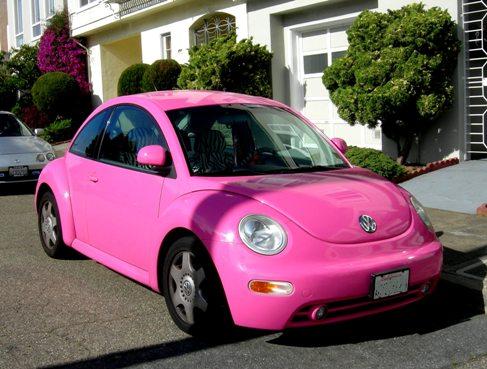
[Edited to add: Oh, and as a bonus – while I was photographing the grass, I encountered the pinkest car I’ve ever seen. And it had zebra-patterned upholstry…]

Our Neighborhood Owls

Yes, there's a great horned owl on the branch...

Out for a walk by Sutro Forest yesterday evening, we saw our neighborhood Great Horned Owls. They live and nest in the forest, and come out around dusk. I first noticed them some years ago, and I’d heard them even before that. (If you hear a soft resonant hoot, that’s them. Most other kinds of owls don’t hoot; they screech or cry out.)

Great horned owl, not a bunch of leaves.

One of them was perched in the fork of a big eucalyptus tree, looking out at the landscape, waiting for dark and hunting time. As we stopped to watch the watcher, its mate arrived, landed on a higher branch, and looked around with interest. As long as we chattered, they ignored us, but when we whistled softly, they bobbed their heads and turned to look at us.

No one had a camera, so these indistinct images are from a cell phone.

It was amazing, to see these splendid birds so near home. “I’ve never seen owls so close up before,” said my companion. We felt very lucky indeed.

A book for San Fran treelovers

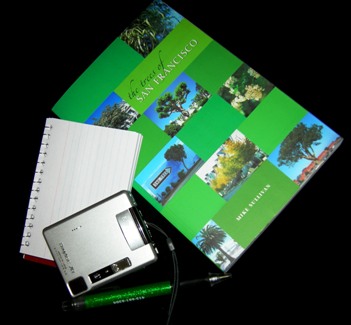
On the Landmark Tree Tour I wrote about recently, they were passing around an interesting book with a green cover: The Trees of San Francisco.  “Mike Sullivan never met a tree he didn’t like…” said the inside flap, about the author. And he called eucalyptus “Australia’s gift to California”  (though he takes a neutral position on the Sutro Forest issue). It was full of photographs and descriptions of San Francisco’s street trees.

I had to have this book.

Ready for a Tree Exploring Walk

It arrived today and it’s even better than I thought. The descriptions are lucid and easy to read. The photographs (by Jaime Pandolfo, a Brazilian resident of San Francisco) are beautiful; some are so artistic you can almost imagine them as posters. And it includes a whole bunch of walking tours, laid out by neighborhood and noting the special trees.

Unfortunately, some of those trees are now not what they were, as storms have taken their toll. A picture of the city’s Christmas Tree – a Monterey Cypress – in front of McLaren Lodge in Golden Gate Park shows the tree in its heyday; today, it’s sadly diminished as large branches have fallen off.

But many of the trees are even bigger. And with all the new trees being planted, we hope later editions of this book will still have thousands of trees to celebrate. Meanwhile, Mike Sullivan has a convenient website at sftrees.com that includes some updates to his book.

(Details: The Trees of San Francisco by Mike Sullivan, Pomegranate Communications, 2004)

Mount Sutro Cloud Forest Hike

It’s been a foggy summer, and here in the Fog Belt, it’s been like living inside a cloud.

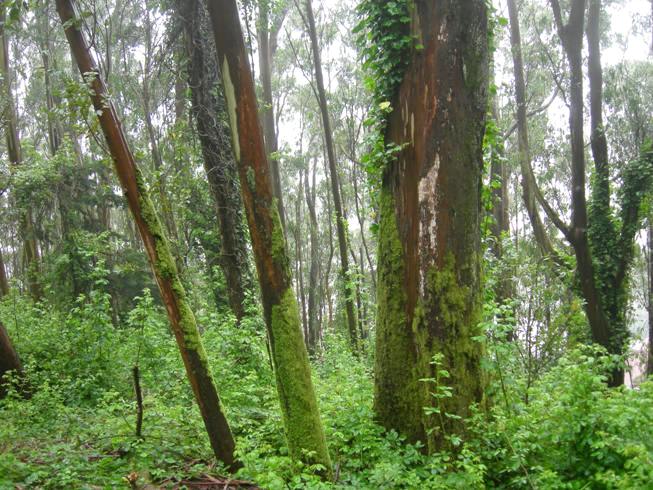
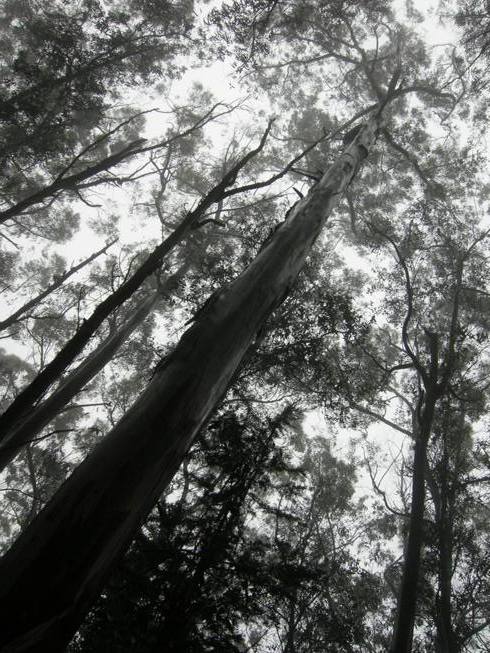
It’s the perfect time, if you like mysterious ethereal forests, for a walk in our neighborhood Cloud Forest. On a foggy day, it may be the most beautiful place in all of San Francisco .

So for those who haven’t done it before… here’s my personal guide to the forest.

There are several ways to approach the forest from our neighborhood, but I’ll divide them into the Adventurous and the Easy. On foggy days, you could describe them as Wet and Dry. Generally, there’ll be few people on either set of routes (though maybe a few more on the Easy ones).
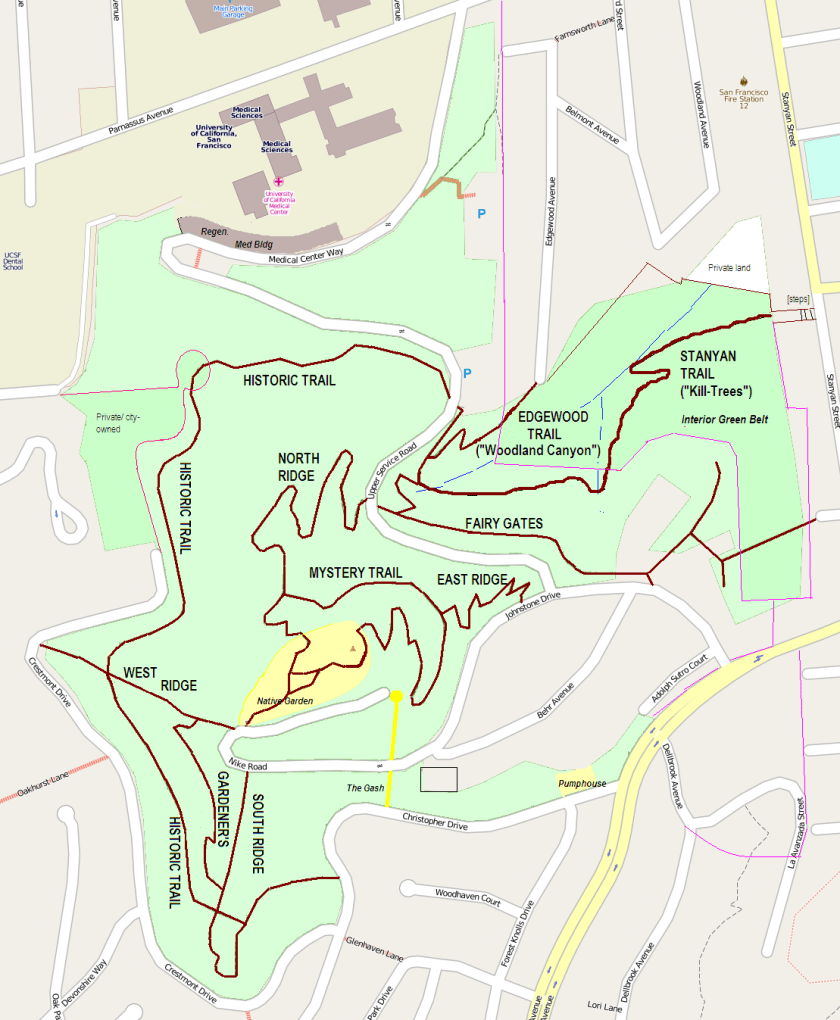
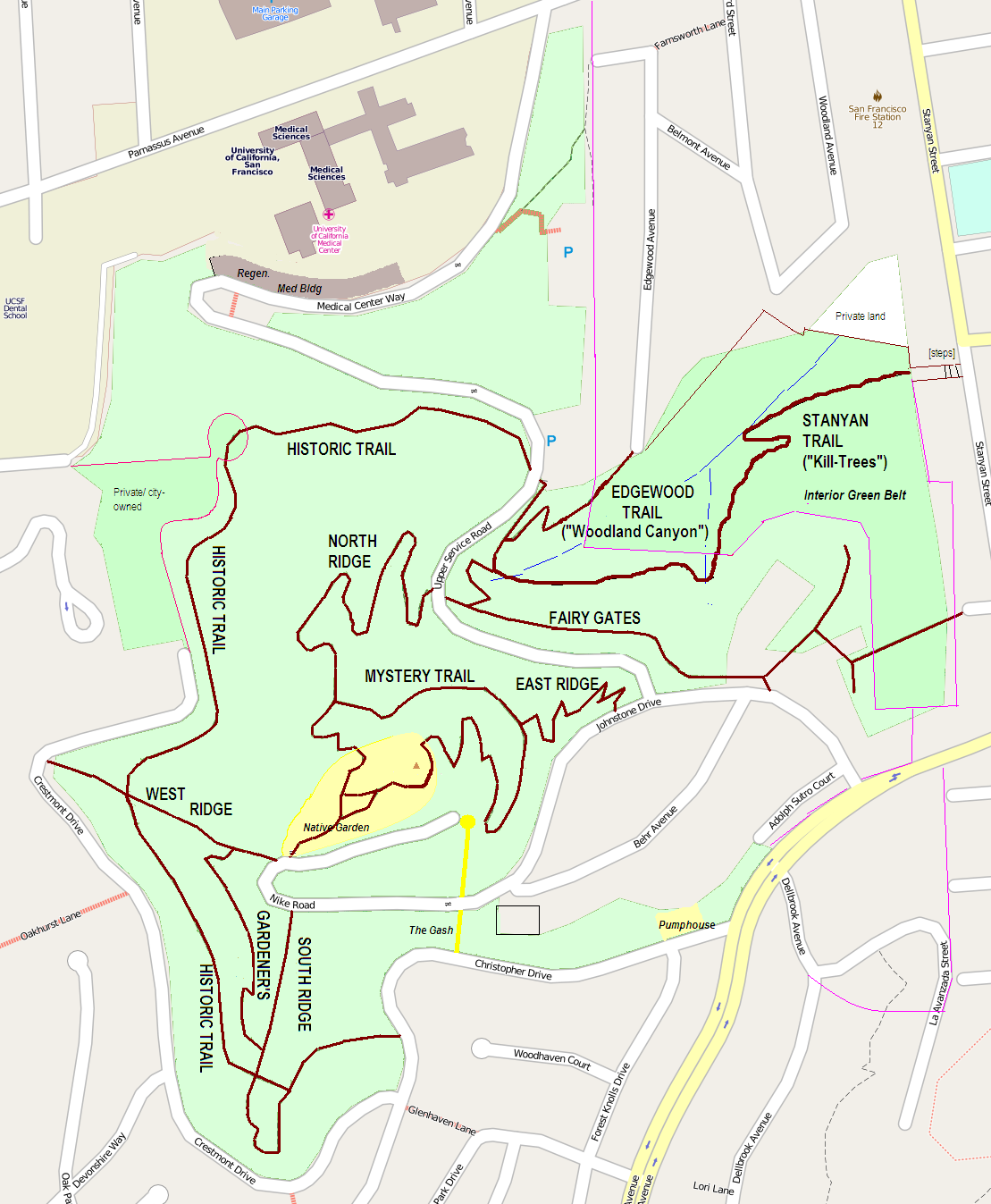
If you double-click on the map above, you get a larger one that can be printed out. (There’s also a Sutro Forest trail map as a PDF file at Pease Press Cartography.)

THE ADVENTUROUS ROUTES

The two routes that lead directly from Forest Knolls are what I call adventurous, for two reasons.

First, access is very steep, especially for the first part of it. It involves scrambling up a trail. It’s not inaccessible by any means – I’ve been up there with neighbors in their sixties. But … it’s not a walk in the park. Also, it’s easier going up than coming down it, so you might plan a route that returns by a less steep path.

Second, on foggy days, it leads into the deepest Cloud Forest. This is actually my favorite part, but it’s Wet. The ground can get very slushy indeed, and I often return with much mud on my shoes and jeans.  Sometimes, the narrowest trails can become boggy.

The first route starts with a few steps opposite 365 Crestmont. On the map, it’s the West Ridge Trail. It’s narrow and you may need to go carefully, moving back blackberry stems as you go. (And be aware there may be poison oak around.)

The second is the access to the South Ridge, opposite 101 Christopher, between the lamp-post and the chain-link fence (fenced radar site) hidden among the bushes. It may even be a little steeper.

There’s also another access point on Crestmont, about halfway between these two, but I think that’s maybe unofficial. It seemed to have more poison oak, too. And finally, I have sometimes scrambled up the Gash left by the SFPUC’s water-pipe replacement (on Christopher) but I don’t recommend it because it’s very steep.  It brings you to the Aldea campus.
THE EASY ROUTES

The “dry” routes, which are still lovely but don’t feel as wild, start out in the Aldea Student Housing. If you want to drive up, you can sometimes find parking on Clarendon Avenue next to the campus. There’s no public parking on the campus itself.

Here again, there are two options.

1)  If you go uphill on Johnstone and then along  Behr, you will come to a chain blocking vehicle access. That’s the Nike Road, and it’s wide and paved. If you follow it to the top (this is a pretty short route) , you will find the Native Garden, officially the Rotary Meadow. It’s about 3 acres of shrubs, (which are green this time of the year) and grass (which is brown). It has  wide gravel paths, and is surrounded by the forest. You can investigate some paths with an easy out if it becomes too steep or slushy.

2)  The second option is the Fairy Gates trail, which starts on Johnstone, right in front of the Chancellor’s House. (That’s the very elegant house opposite the lower intersection of Johnstone and Behr. Do stop to notice the stand of redwoods right there…) This trail is pretty dry, not too steep, and quite broad except where it goes between two rocks (the “Fairy Gates”). It used to be more wooded in feeling, but some trees have been removed on either side and it’s now very open except at the beginning. It offers views of the forest in the ravine below, and has nasturtiums blooming along parts of it. It ends on the road through the forest, Medical Center Way. Though that is open to traffic, it has sidewalks. Also, not much traffic goes that way, especially not now when the bottom end is closed for construction. [ETA: It’s reopened. Watch out for cars, but there’s still not much traffic.]

If you feel like checking out the forest a bit more, the bottom part of the Historic Trail is also relatively dry, though if you follow it to the top it takes you back into the clouds. The Edgewood Trail will take you down  into the Edgewood neighborhood. It’s steep but not very muddy. This area has some huge trees and interesting terrain.

3. [ETA June 2011:  There is a new trail now from Stanyan (just above 17th) that climbs up to Medical Center Way. Of course, you can also take it in the opposite direction. Though it’s a climb, it’s quite broad and easy to hike. Its bottom end starts with a wooden staircase between two houses; the top end connects to Medical Center Way.]
OTHER TRAILS

These are many other trails, of course.  Exploring the whole mountain probably wouldn’t take more than 3-4 hours. The rule of thumb is that in areas where the forest canopy is open and the undergrowth thinned, the trails tend to be dry (and sometimes slippery with dust and dry leaves). Where it’s closed, and the undergrowth remains, it’s usually damp or wet (and sometimes slippery with mud). Dress warm on foggy days, and expect it to be quite cool even on warmer ones. I always wear long sleeves, jeans, socks and walking shoes I can get muddy. (It also helps in case of poison oak… haven’t been hit by it yet, in all the time I’ve wandered around in there.) There’s a checklist here.

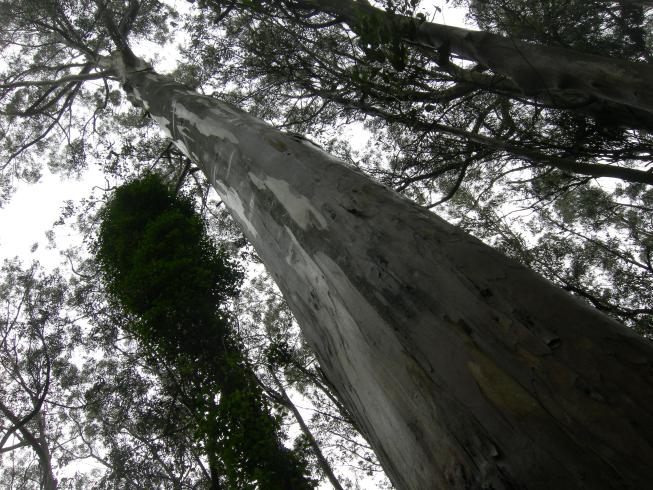
Despite all these warnings, this is a pretty accessible forest. To me, it’s completely worth it to be among those tall trees, their tops in the gray mist while inside the forest it’s fresh and green in the dimness. Birds don’t sing much in the fog, but there’ll be the odd tweet or rustle. Sounds get muffled. Usually, there are few people around. It’s the wild part of the woods. If it’s twilight, you might hear or see the Great Horned Owls.  For those who enjoy a little walk on the wild side, one of the best features of Forest Knolls is the forest.